
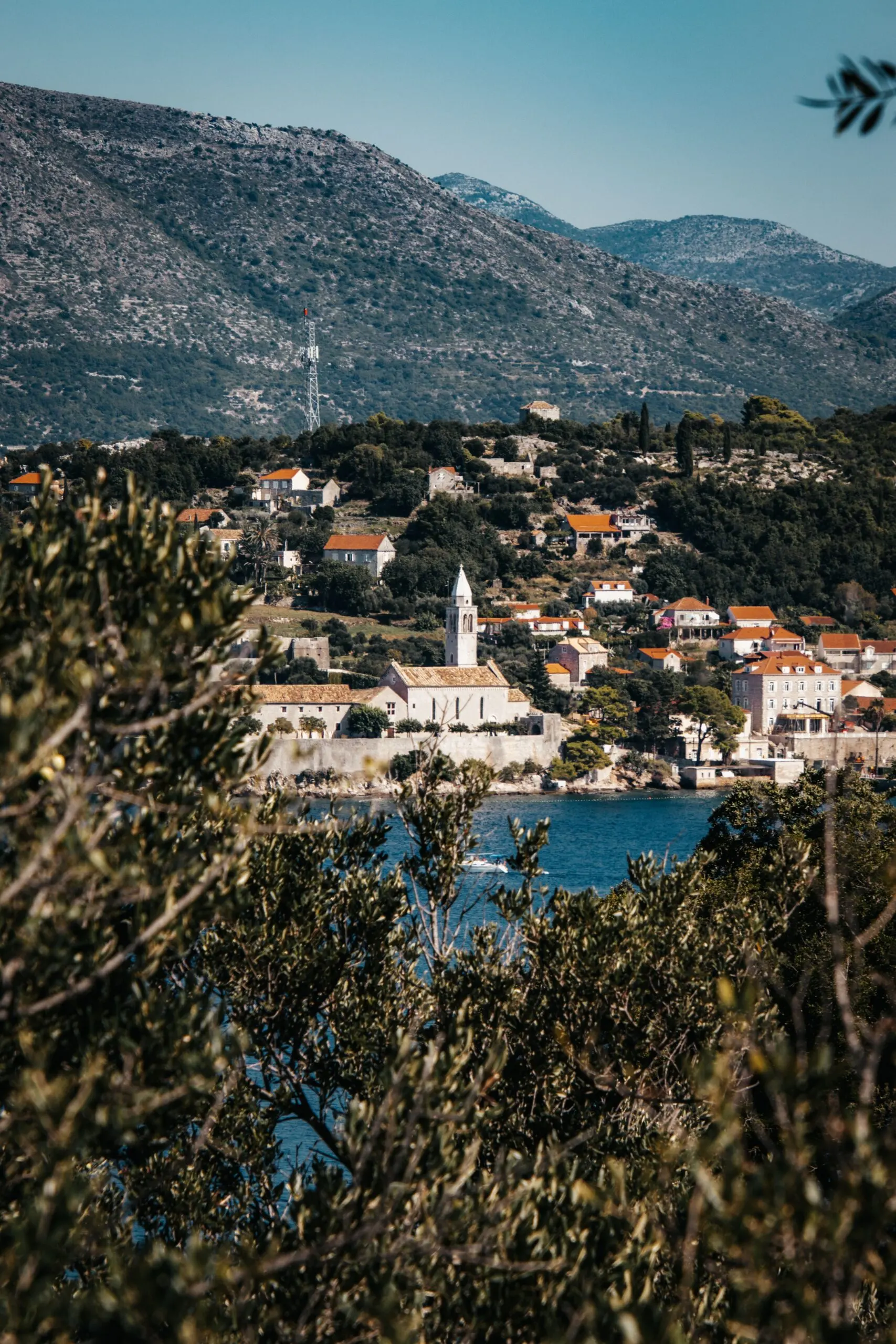
With the arrival of autumn in Istria, a quiet, almost surreal metamorphosis takes place. The summer bustle fades from the coast, and the interior of the peninsula sinks into mist, the scent of damp earth, and smoke from open hearths. It is then that the old hilltop stone towns take on their true, cinematic character.
This is not a classic weekend-trip guide. This is a sketch for a journey into quiet, continental Istria – among three stone sanctuaries where time is measured by the rhythm of the wind and old stories.
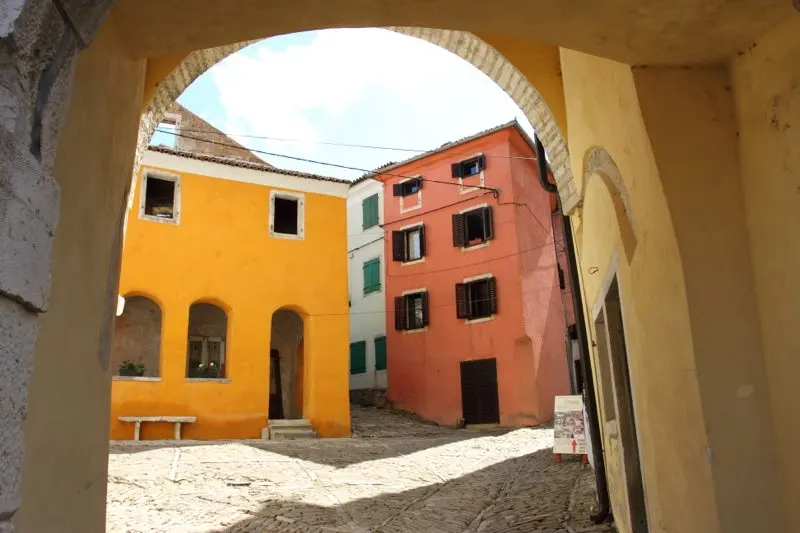
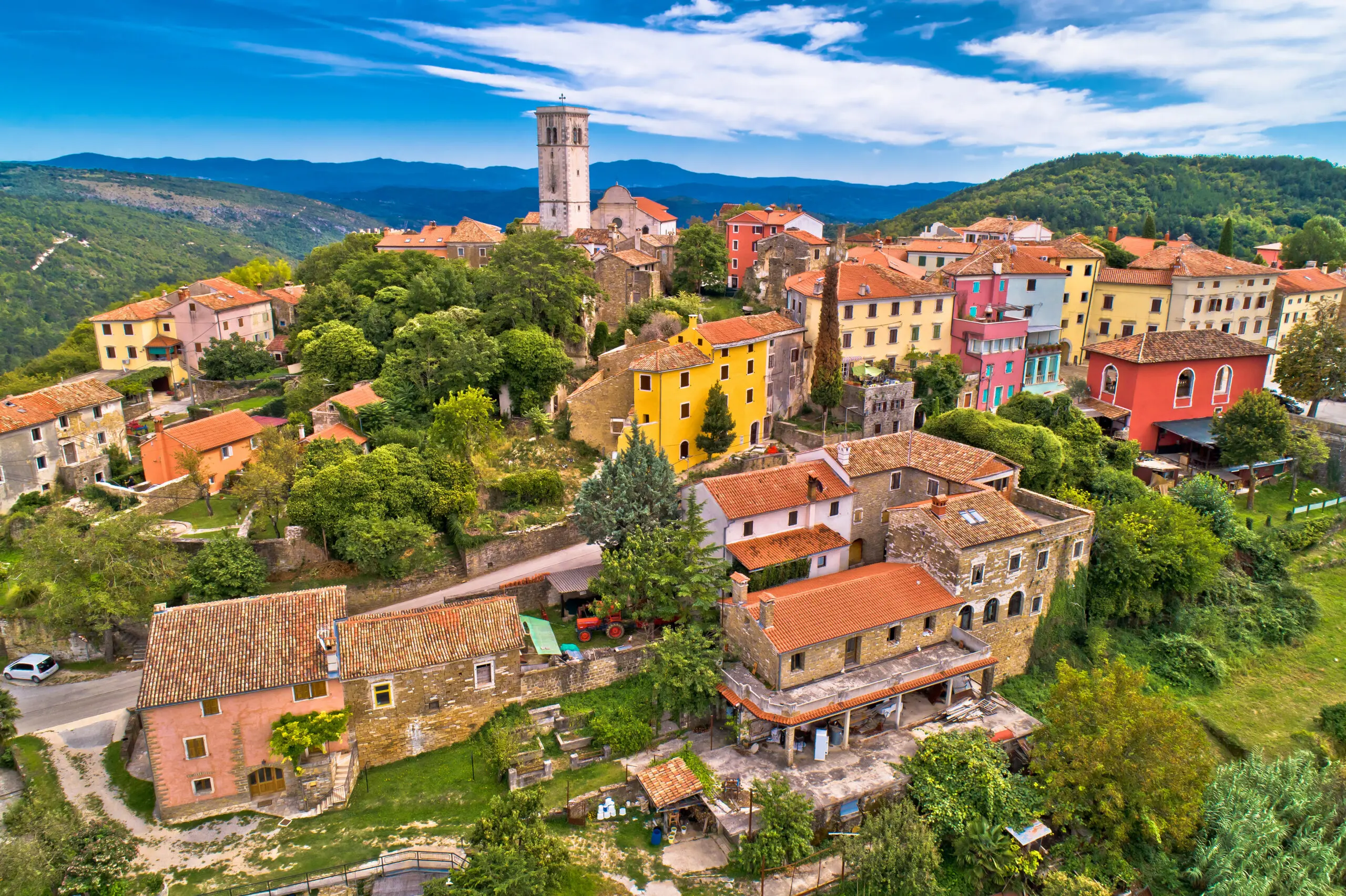
Oprtalj: A Romantic Balcony Over a Misty Valley
Perched high on a steep hill, with a view sweeping across the green valley of the Mirna River, Oprtalj looks as if it is floating somewhere between heaven and earth.
Atmosphere and details: As you wander through its deserted, quiet alleyways, you come across old Venetian palaces, lavishly carved balconies, and heavy wooden doors with peeling paint. There are no tourist crowds like in Motovun here – only peace, art studios, and silence.
Morning scene: Step out at dawn to the edge of the old town fortress. Down in the valley, a thick white fog rolls in, while the first rays of the sun ignite the vineyards and olive groves in copper tones.
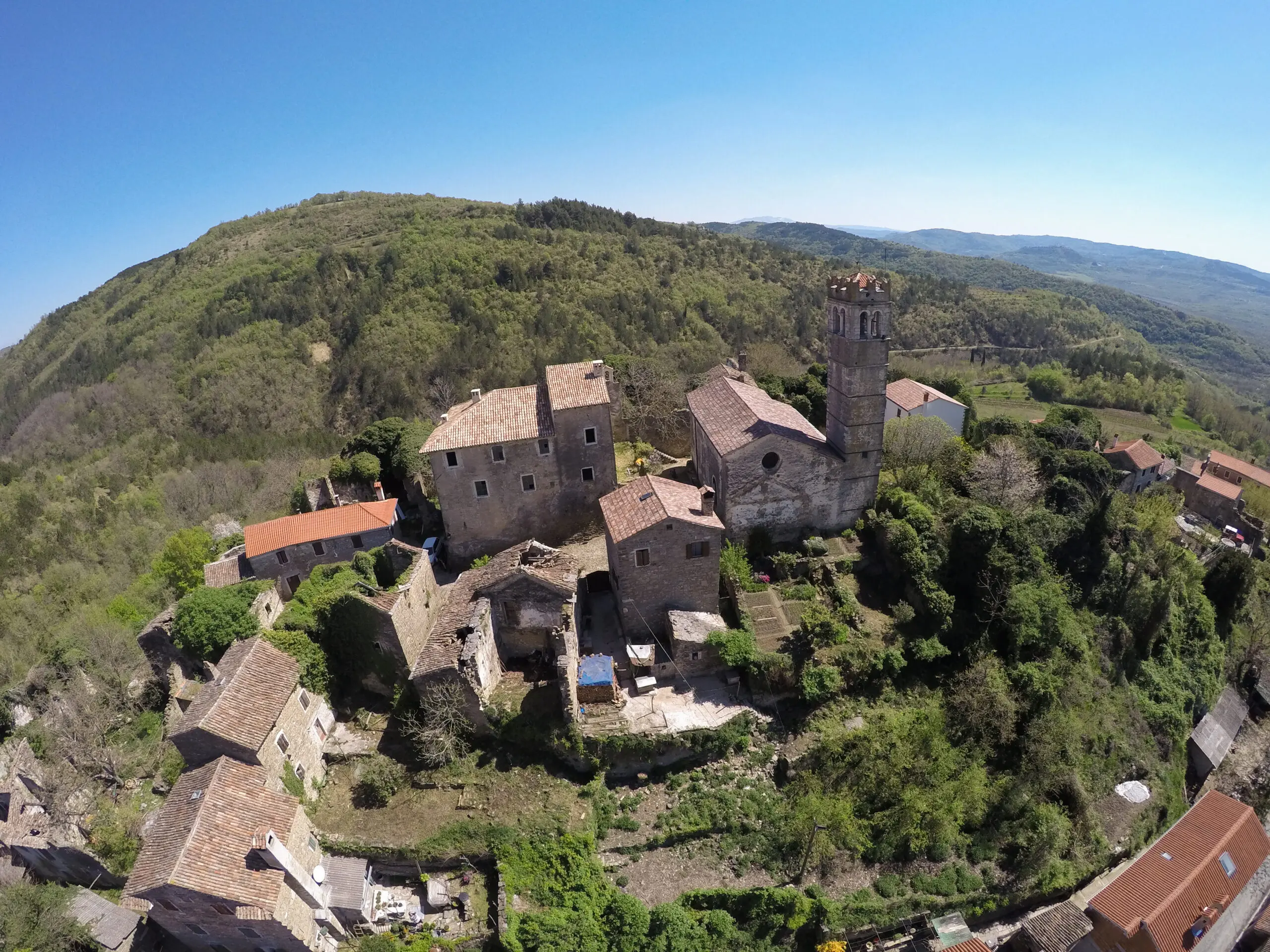
Završje: A Living Sculpture of Stone If Oprtalj is a balcony, then Završje is a true, three-dimensional stone sculpture clinging to the edge of a steep cliff.
Architecture: The houses are huddled tightly together, connected by mysterious arches, stone staircases, and hidden courtyards shaped over the centuries by the bura wind and time. Once nearly abandoned, today it is slowly being brought back to life by artists and lovers of heritage aesthetics.
Visual impression: The dark, ancient Istrian stone combined with fiery autumn leaves creeping up the facades creates scenes you wish would never move.
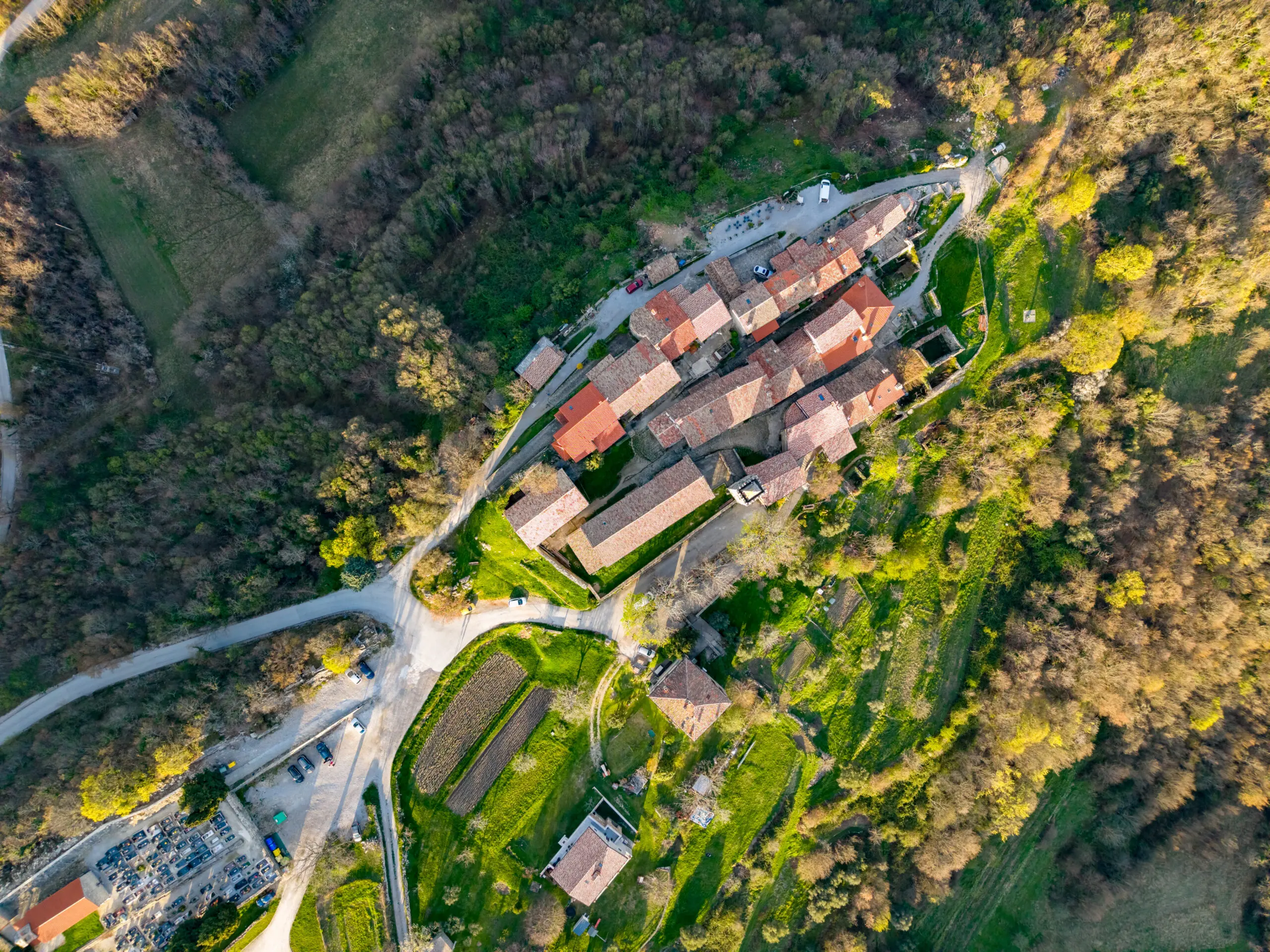
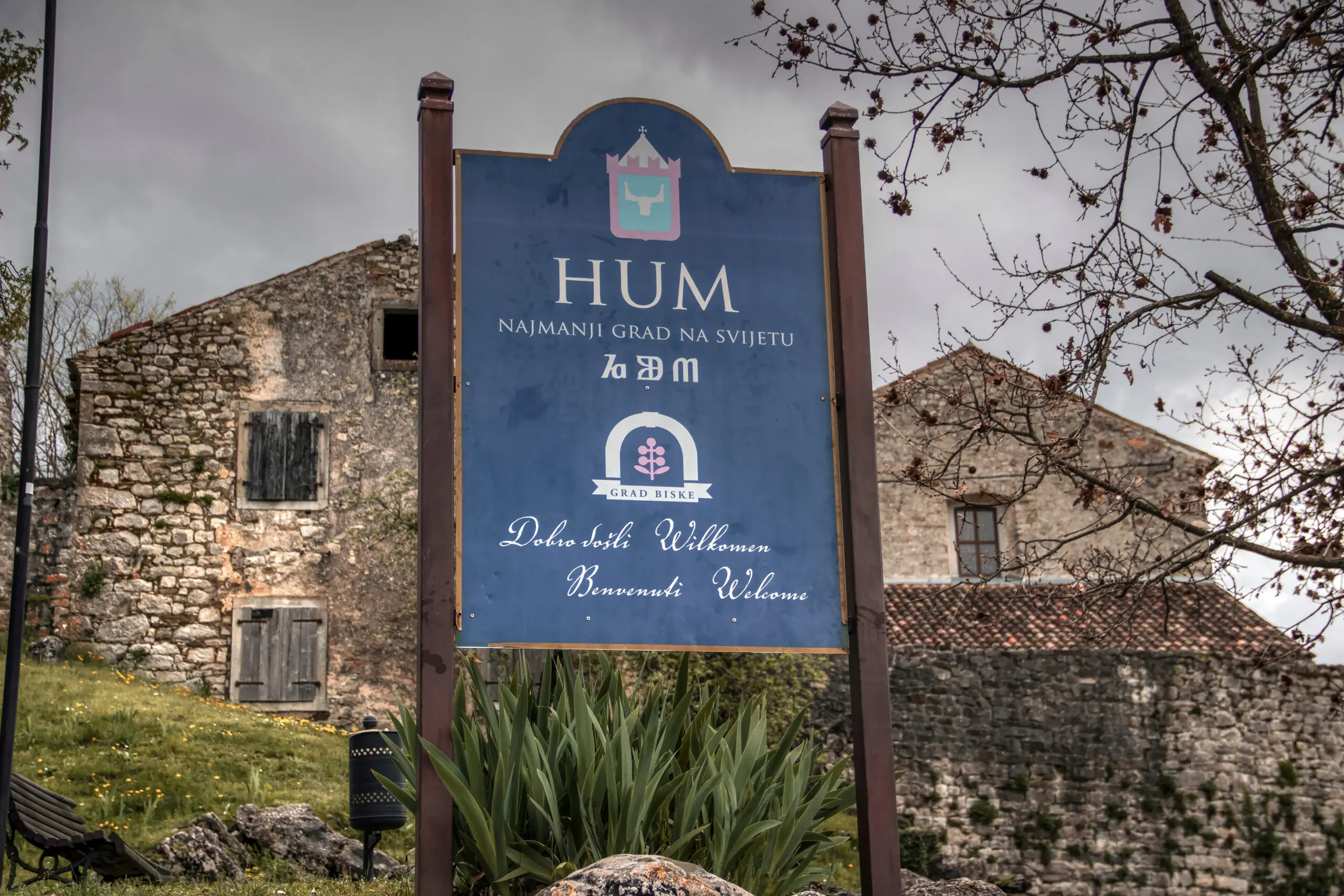
Hum: The Smallest Town in the World The final stop on this route is Hum – officially listed in the Guinness Book of Records as the smallest town in the world, with barely thirty permanent residents.
A world of its own: Passing through the massive town gates feels like stepping into a time machine. Right beside the walls stands the Romanesque Church of St. Jerome, featuring 12th-century frescoes that guard the secrets of bygone centuries.
A path through letters: Leading to Hum is the famous Glagolitic Alley – a series of stone monuments along the road adorned with the ancient Slavic script.
A closing ritual: By the warm hearth of a local konoba (tavern), be sure to order biska – a traditional Istrian mistletoe brandy made according to centuries-old recipes.
Travel Note: For this route, choose comfortable footwear for walking on uneven stone paving and a warm jacket for crisp mornings. The best way to experience it is to stay overnight at one of the old stone stancijas (country estates) in the area, by a crackling fireplace with a glass of local Merlot.
Images: Pexels