
In the Mirna River valley, November begins with the scent of damp clay, fallen oak leaves, and mist that clings to the stone rooftops of Motovun until noon. While the coast quiets down after the summer rush, a tranquil yet thrilling rhythm takes over here: ten to twenty centimetres beneath the earth lies a fungus that draws buyers, chefs, and gourmets from Milan, Vienna, and Paris to Istria each season.
In Istria, the world of truffles does not rely on flashy advertising, but on family dynasties where maps of hidden hunting grounds are passed down from hand to hand, and the most trusted partner is a dog that knows every slope and stream at the foot of the hill.
Livade and a Spot on the Map
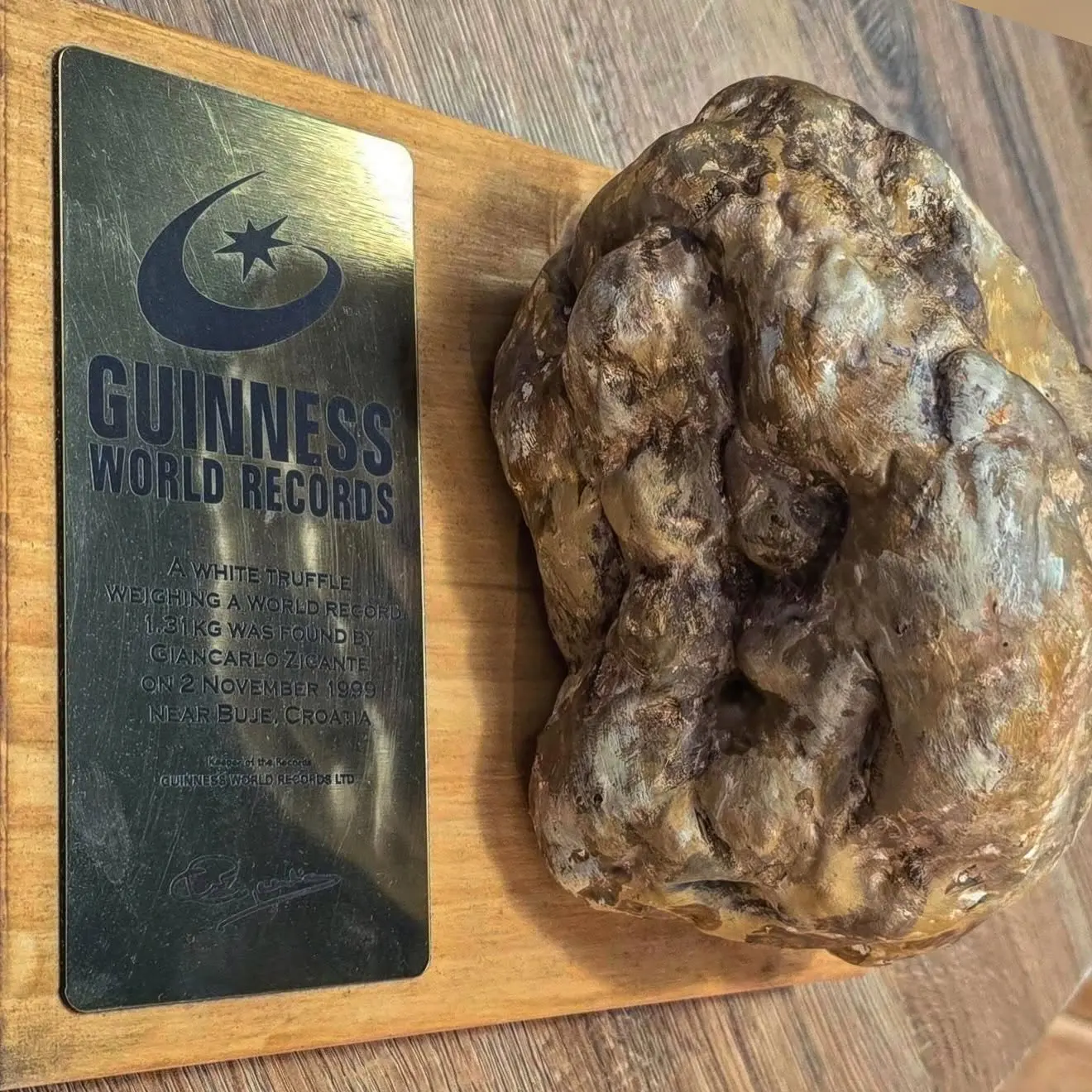
Until the late 1990s, Istrian truffles often crossed into neighbouring Italy nameless—only to return under someone else’s label. The turning point came on November 2, 1999, when truffle hunter Giancarlo Zigante and his dog Diana uncovered a white truffle weighing 1.31 kilograms in the Motovun Forest. The find entered the Guinness World Records, permanently placing Livade on Europe’s culinary map.
Today, Zigante Tartufi sets a high benchmark in the industry with its restaurant in Livade and its autumn Truffle Days, though to feel the true pulse of the hunt, it is worth heading toward Buzet—where the road winds between stone hamlets and quiet fields.
Three Generations and a Nose to the Ground
In the village of Paladini, overlooking the waters of Lake Butoniga, lives the Karlić family (Karlić Tartufi). They have been hunting truffles since 1966—today, the business is led by the third generation, headed by Ivana Karlić.
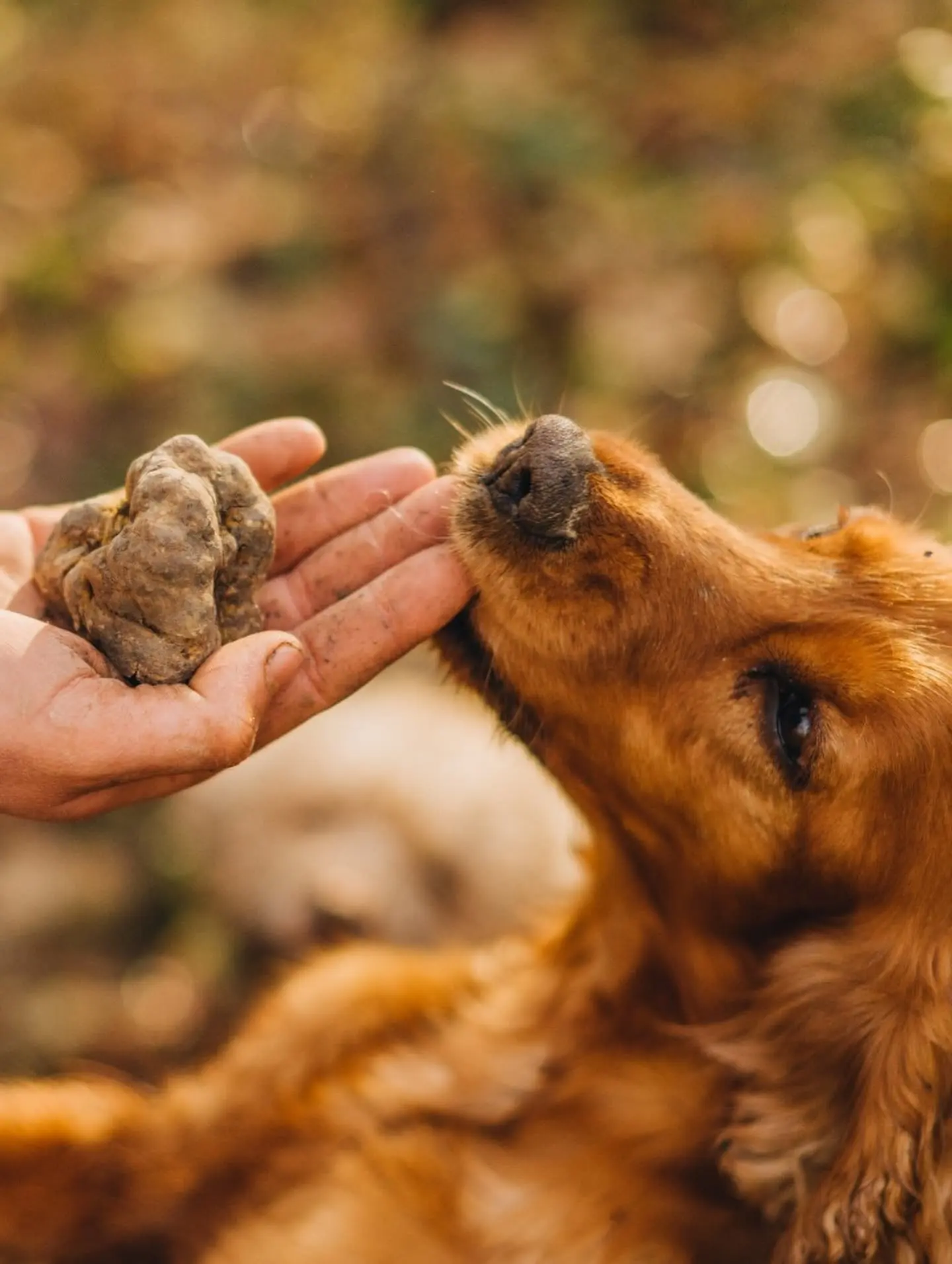
In the forest, there is no rush and no loud commands. Only the rustle of wet grass, a subtle signal from the hunter, and the muffled bark of a Lagotto Romagnolo—a breed historically linked to truffle hunting (though other dogs and mixed breeds frequently work alongside them in the woods). When a dog stops and begins to dig cautiously with its paws, time seems to compress: the hunter drops to their knees, unearths the tuber with a small spade, and immediately covers the hole back up, preserving the mycelium for the following year.
Not far from there, in the hamlet of Prašćari near Buzet, the Prodan family (Prodan Tartufi) welcomes visitors in an intimate, home-style atmosphere—with long conversations around a long table after a forest walk, chilled Malvasia, and warm fritaja over which fresh truffle is shaved right in front of you. In the village of Srnegla, the Puh family crafts Natura Tartufi without synthetic flavourings, while at the foot of Motovun and in the old town centre itself, Miro Tartufi by Miro Kotiga keeps its own steady pace—offering forest walks and tastings by prior arrangement.
White vs. Black
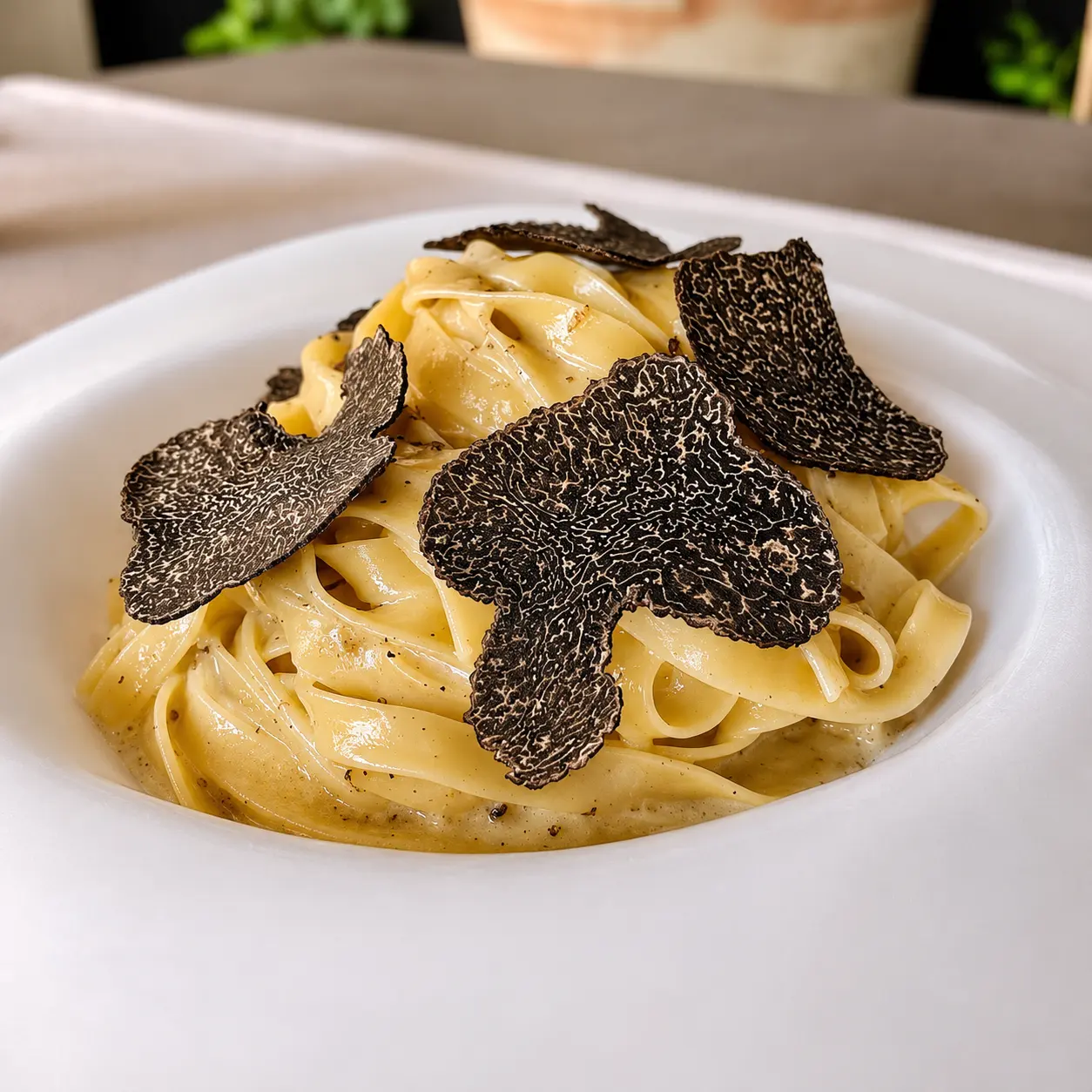
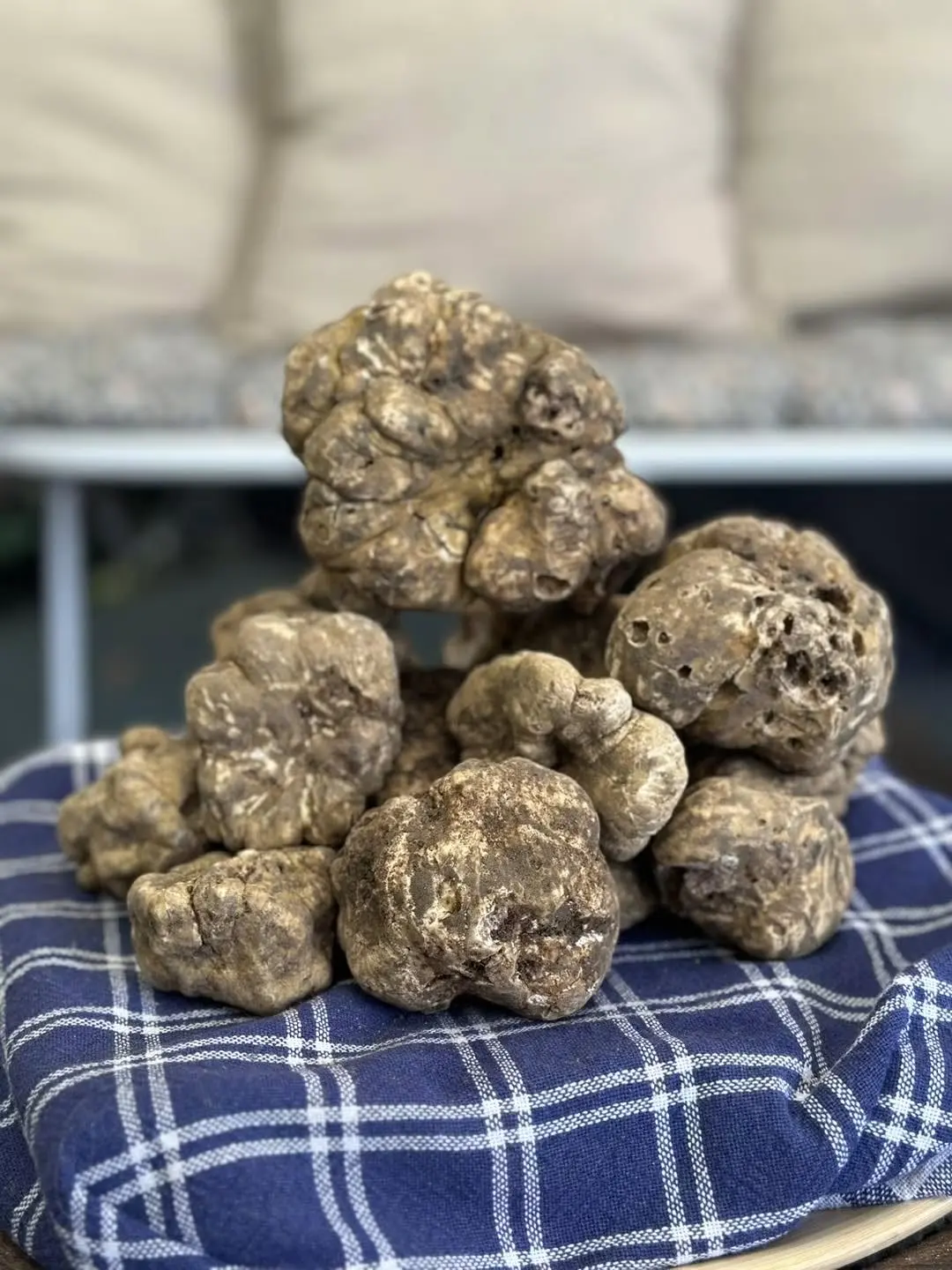
The white truffle (Tuber magnatum pico) is temperamental and expressive: its season runs from September to the end of December, with November and December marking the peak. It cannot tolerate frying or cooking—instead, it is shaved in paper-thin slices over warm pasta or eggs, releasing an instant aroma of damp forest floor, garlic, and aged cheese.
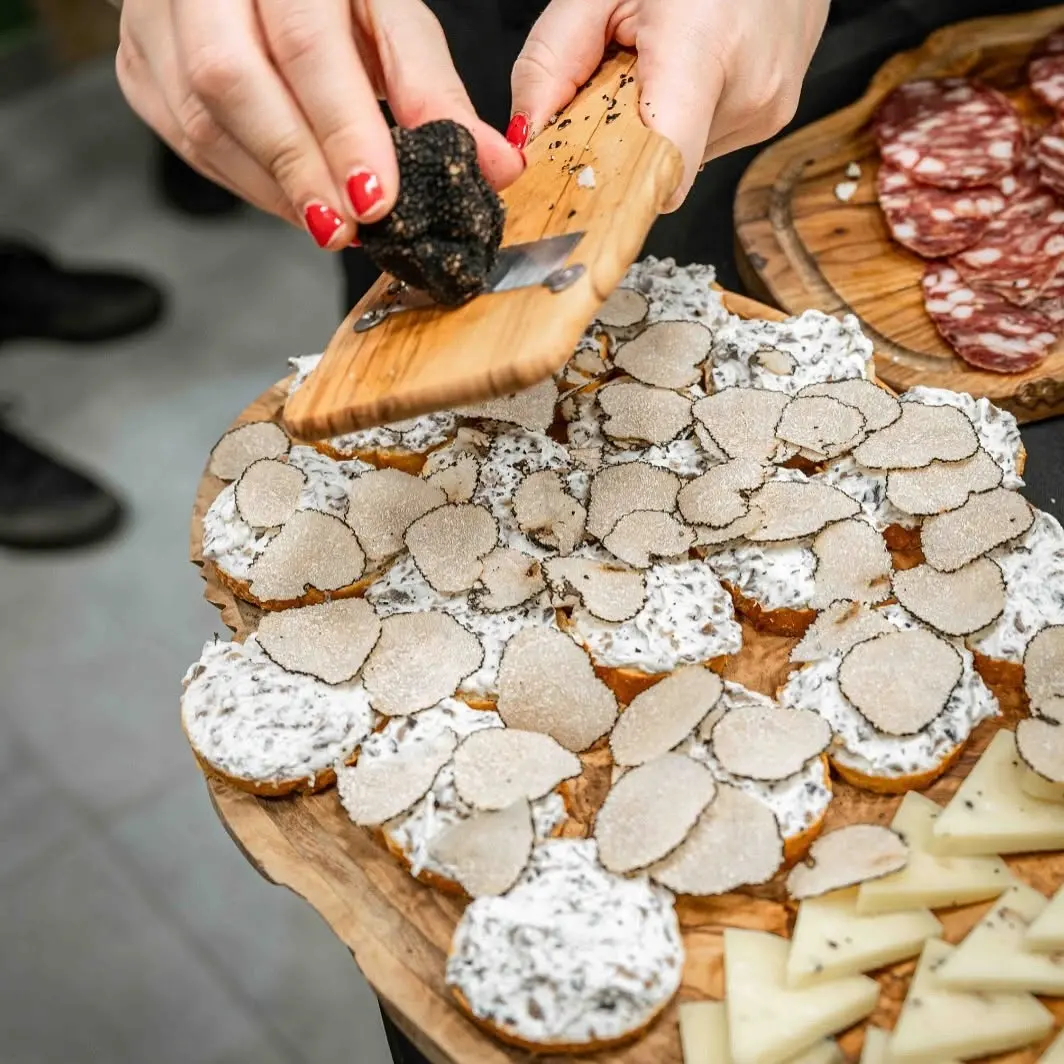
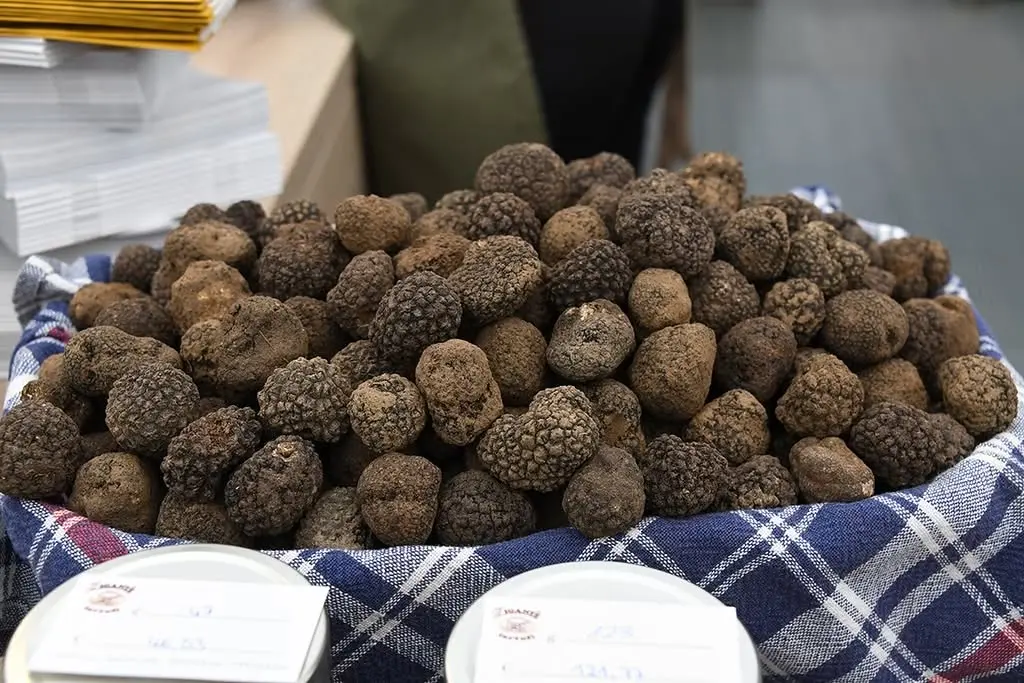
The black truffle (Tuber melanosporum and Tuber aestivum) is a more restrained and steady companion. The winter black truffle gains strength in late autumn and stays through spring: it pairs effortlessly with a warm creamy sauce over homemade fuži pasta or alongside a steak of Istrian boškarin cattle.
Unhurried at the Table
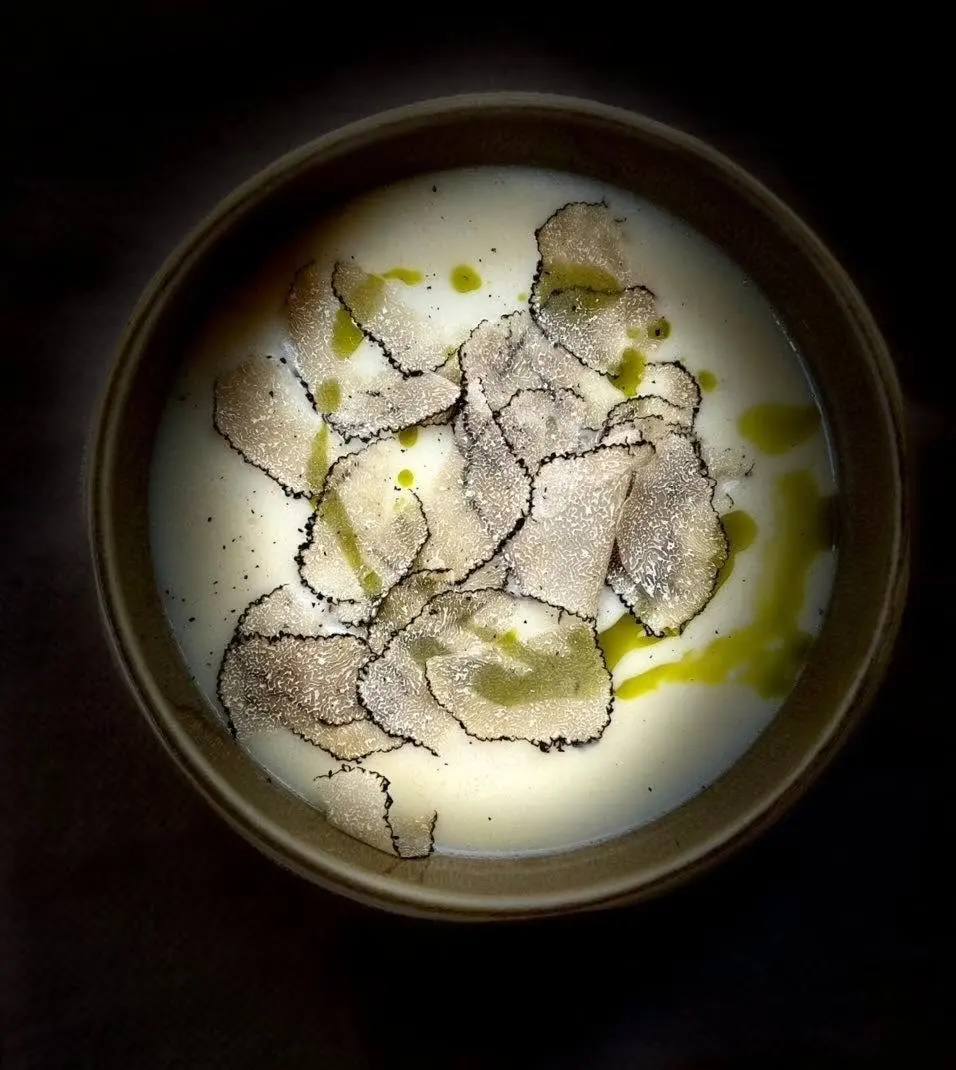
In the spirit of simple Istrian cooking, there is no need here to turn a rare ingredient into an elaborate spectacle. A plate of warm pasta, a spoonful of good olive oil, and a few grams of fresh truffle are more than enough—while cold fog thickens outside once again and a sip of crisp red Teran lingers in the glass.
Notes in the Margin
Season and timing: The official white truffle season lasts from September through the end of December (sometimes longer, depending on regulations), though the harvest depends heavily on weather and rainfall—it is always wise to check the availability and price of fresh white truffles in advance, while winter black truffles are harvested throughout winter and early spring.
Reservations: The Karlić, Prodan, Natura, and Miro estates welcome guests year-round, though during the colder months it is best to arrange forest walks and tastings a few days ahead.
What to bring home: A whole fresh truffle in season (packed in vacuum seal, or best stored wrapped in a paper towel inside a glass jar in the fridge, changing the towel daily) or a tartufata spread with a clear, honest ingredient list. Flavoured oils without real truffle in the ingredients are, in most cases, merely aroma rather than a true trace of the forest hunt.
Images: Zigante Tartufi, Karlic Tartufi