
Forget dusty cellars in ancient castles. Today, at Croatia’s most exciting winemaking addresses, all you need is a wetsuit and a little patience.
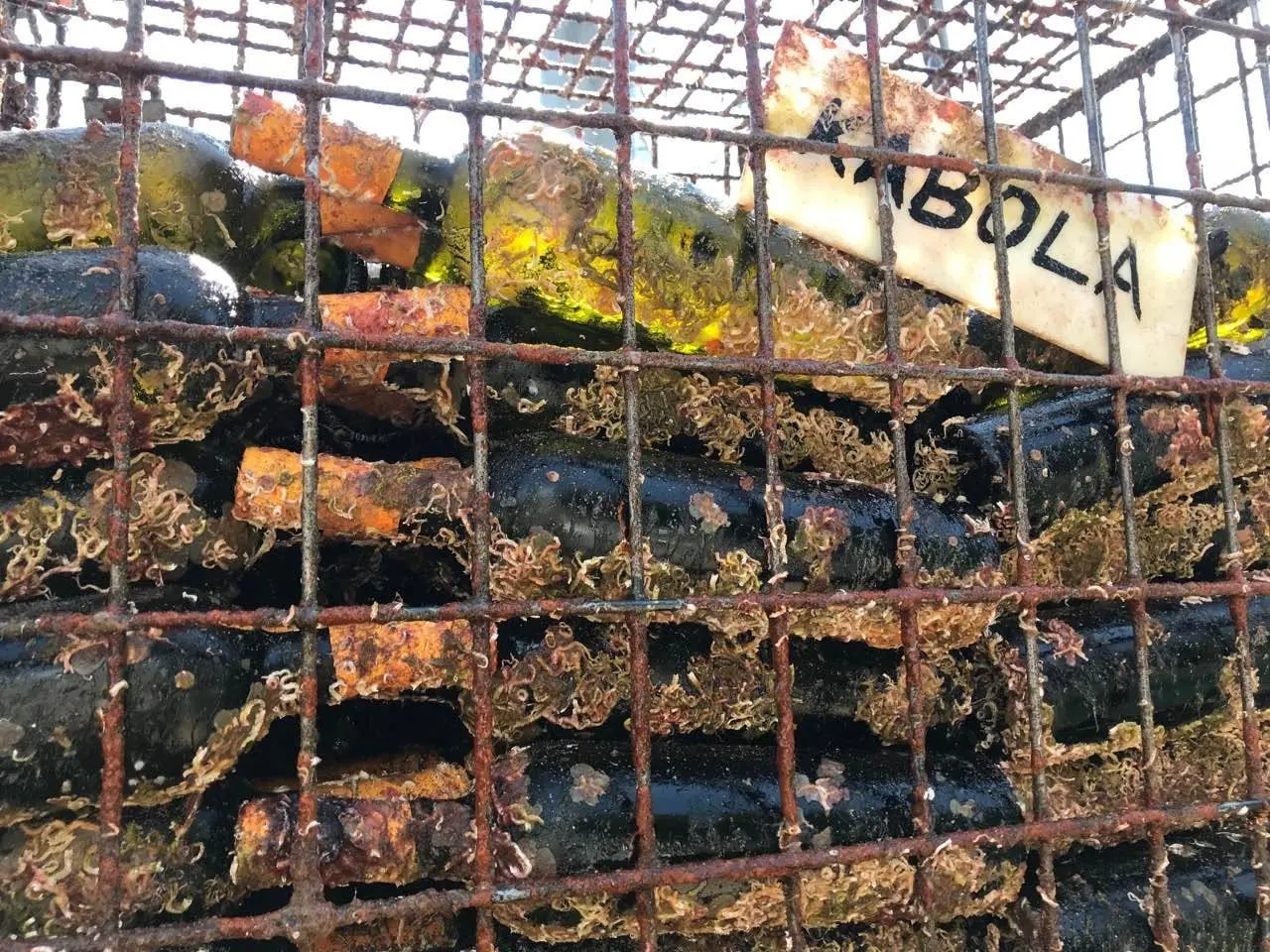
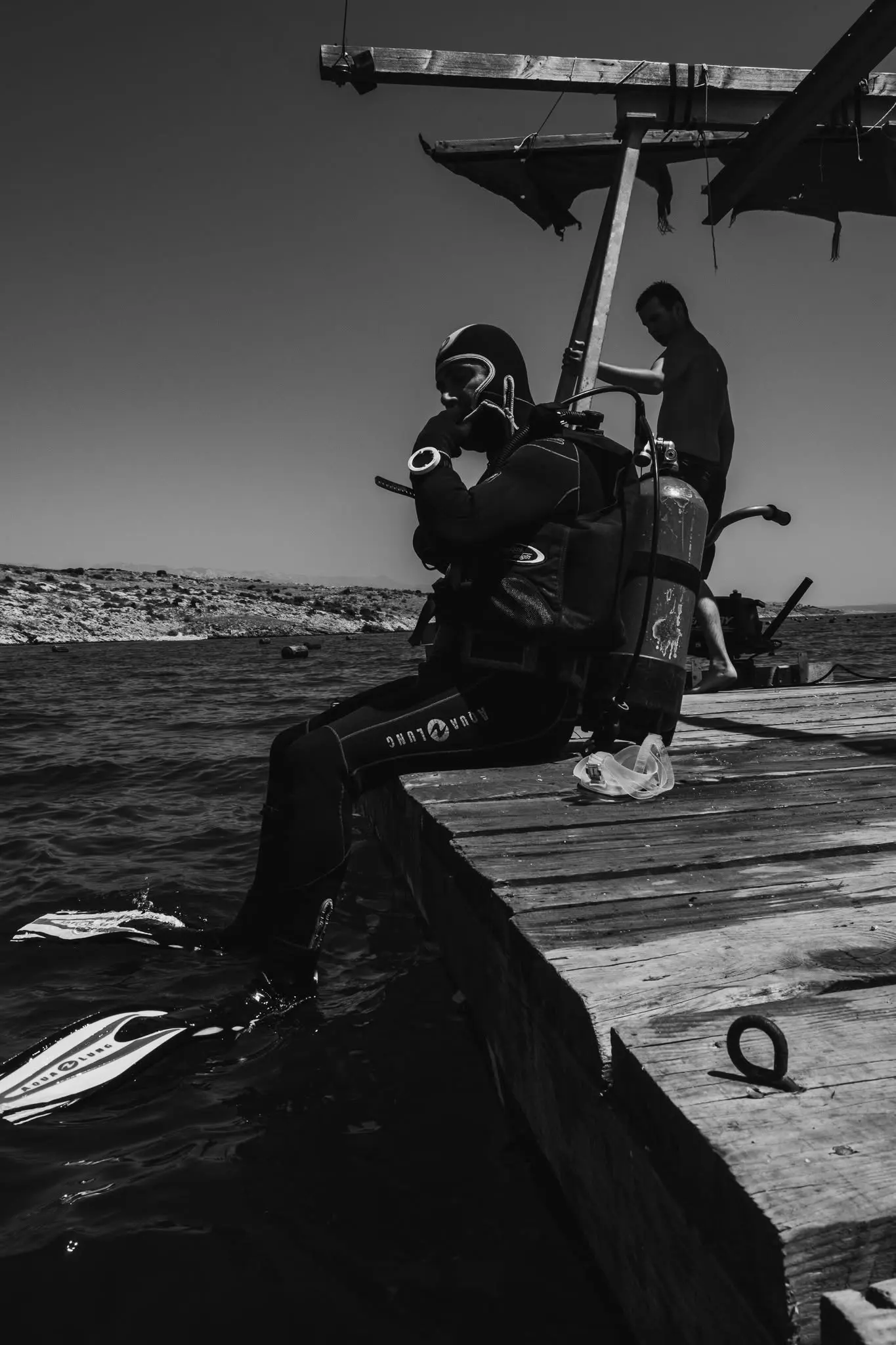
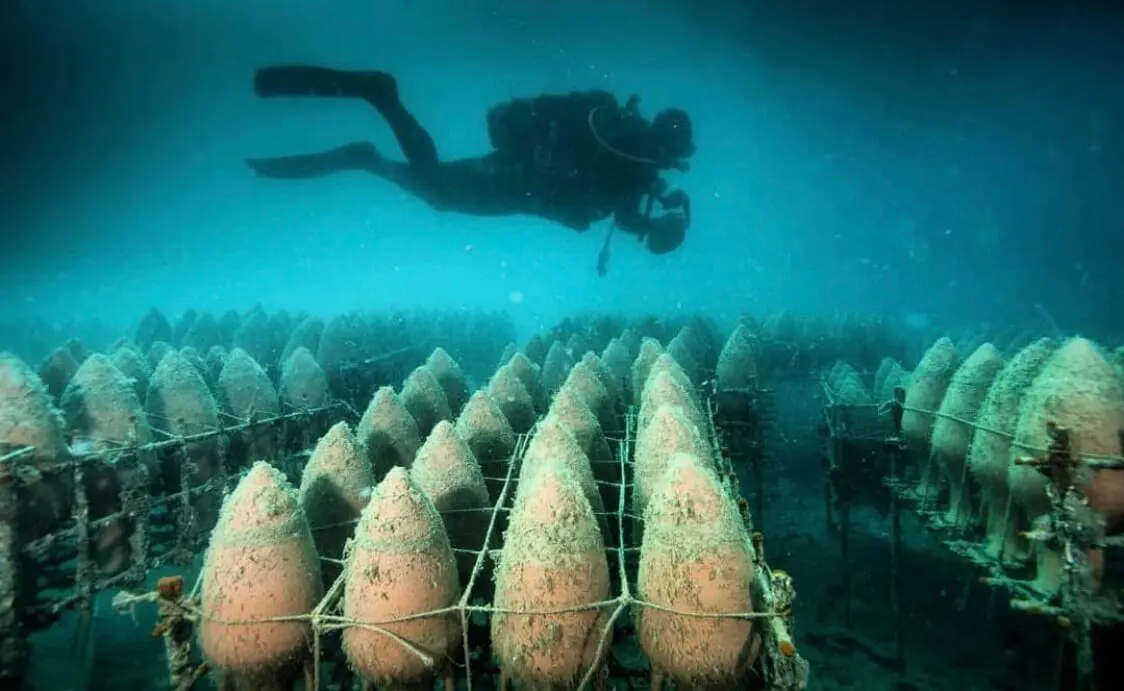
Thirty meters beneath the surface of the Adriatic lies that special, dense stillness known only to divers. Down here, there is no summer heat and no bura wind, no sunlight to disrupt the balance, and the sea maintains a perfect, unchanging temperature of 12 degrees Celsius. In that quietude, inside heavy metal cages resting on the seabed, thousands of dark-green bottles sway for months and years to the barely perceptible rhythm of the sea currents.
The idea is nothing new—just think of the ancient amphorae recovered from sunken Roman galleys whose contents remained intact for centuries—but in Istria, Kvarner, and Pelješac, it has been elevated into a true minor art form. Under four bars of pressure and in complete isolation from oxygen, the sea takes on the role of a patient cellar master. Ocean currents perform a natural remuage, gently turning the lees so sparkling wines develop remarkably fine, silky bubbles, while red and skin-contact wines lose their sharp edges and acquire a deep, almost briny minerality impossible to replicate on land.
If you want to track down these bottles—and trust us, it is worth the effort—here are the places, labels, and stories you need to know:
Istria and the Undersea Waters of Ika: Uncompromising Amber Wines
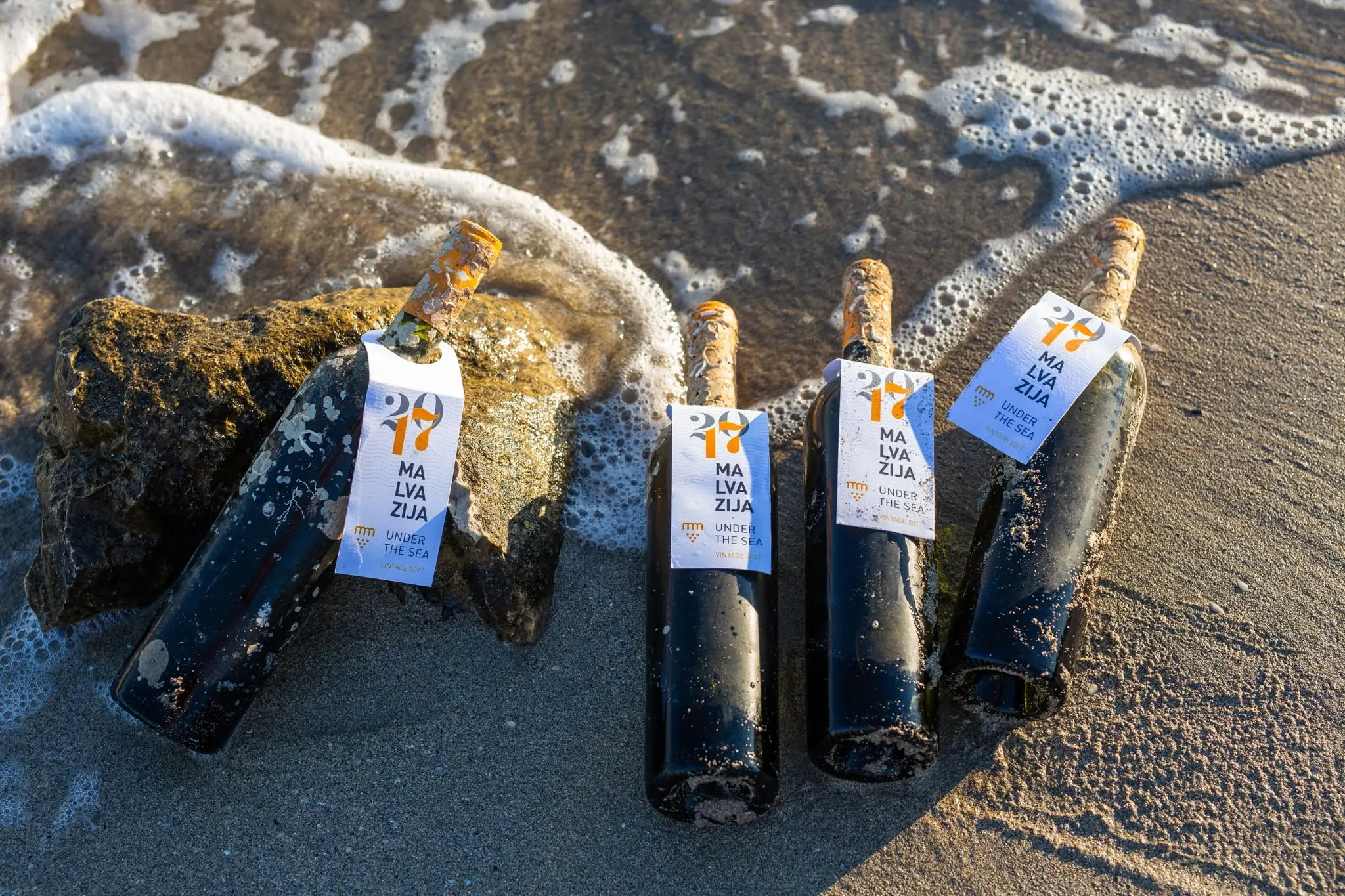
Along the western coast of Istria—from Savudrija and Poreč to Rovinj—as well as in the waters off Ika, right on the border of Istria and Kvarner where submarine freshwater springs (vrulje) cool the seabed at a depth of around twenty meters, perhaps the most thrilling experiment is unfolding. Renowned Istrian winemakers—such as the iconic Momjan winery Kabola, celebrated for its amphorae and organic farming, alongside family estates Rossi and Prelac—submerge aged Terans and natural, extended-maceration wines, most notably amber Malvazija. Under the constant pressure and chill of the deep, sharp tannins turn silky, and when you open one of these bottles, you are greeted by layered aromas of fig jam, dried Mediterranean herbs, iodine, and dry oak bark.
Vrbnik, Island of Krk: Where It All Began
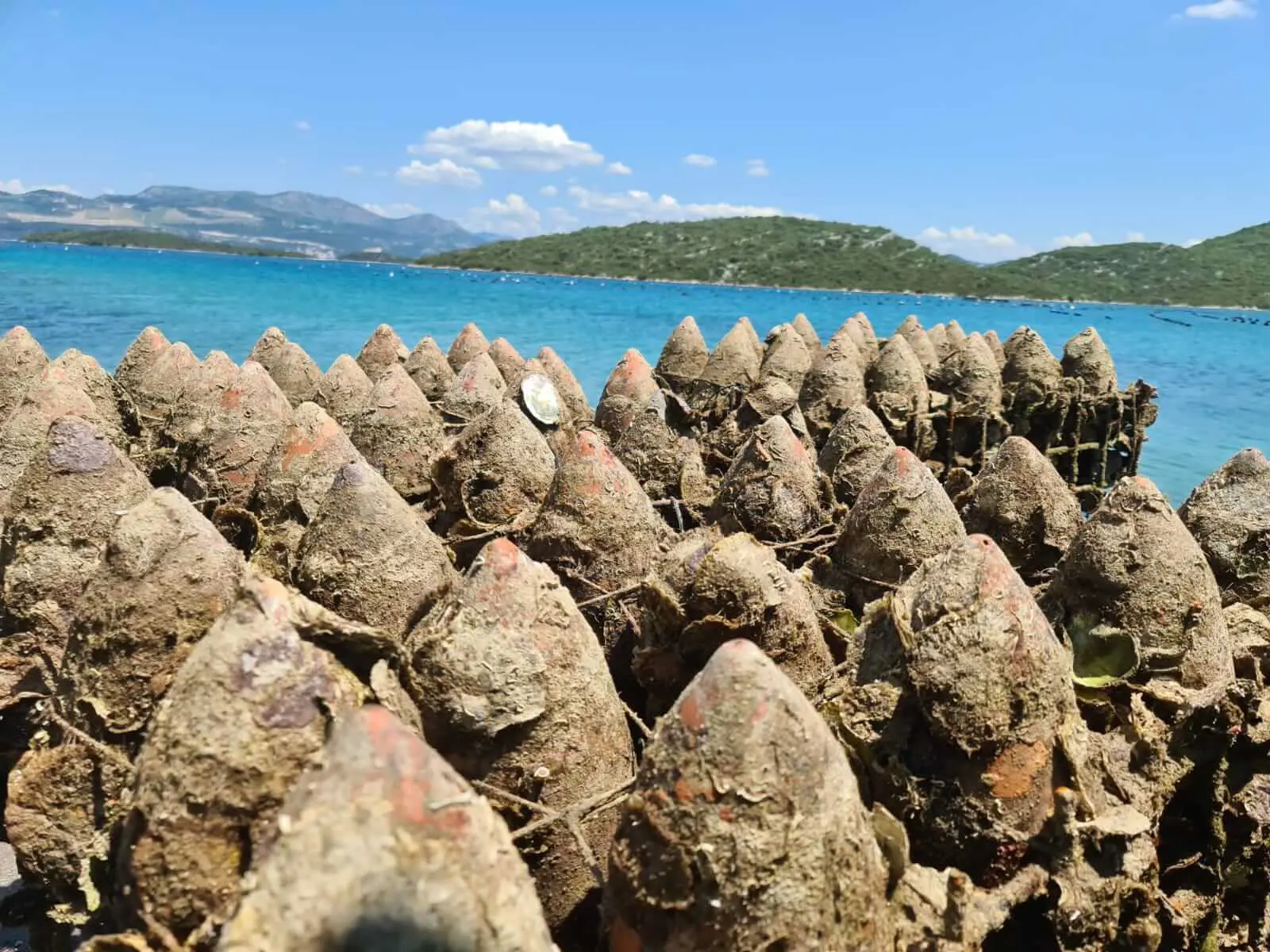
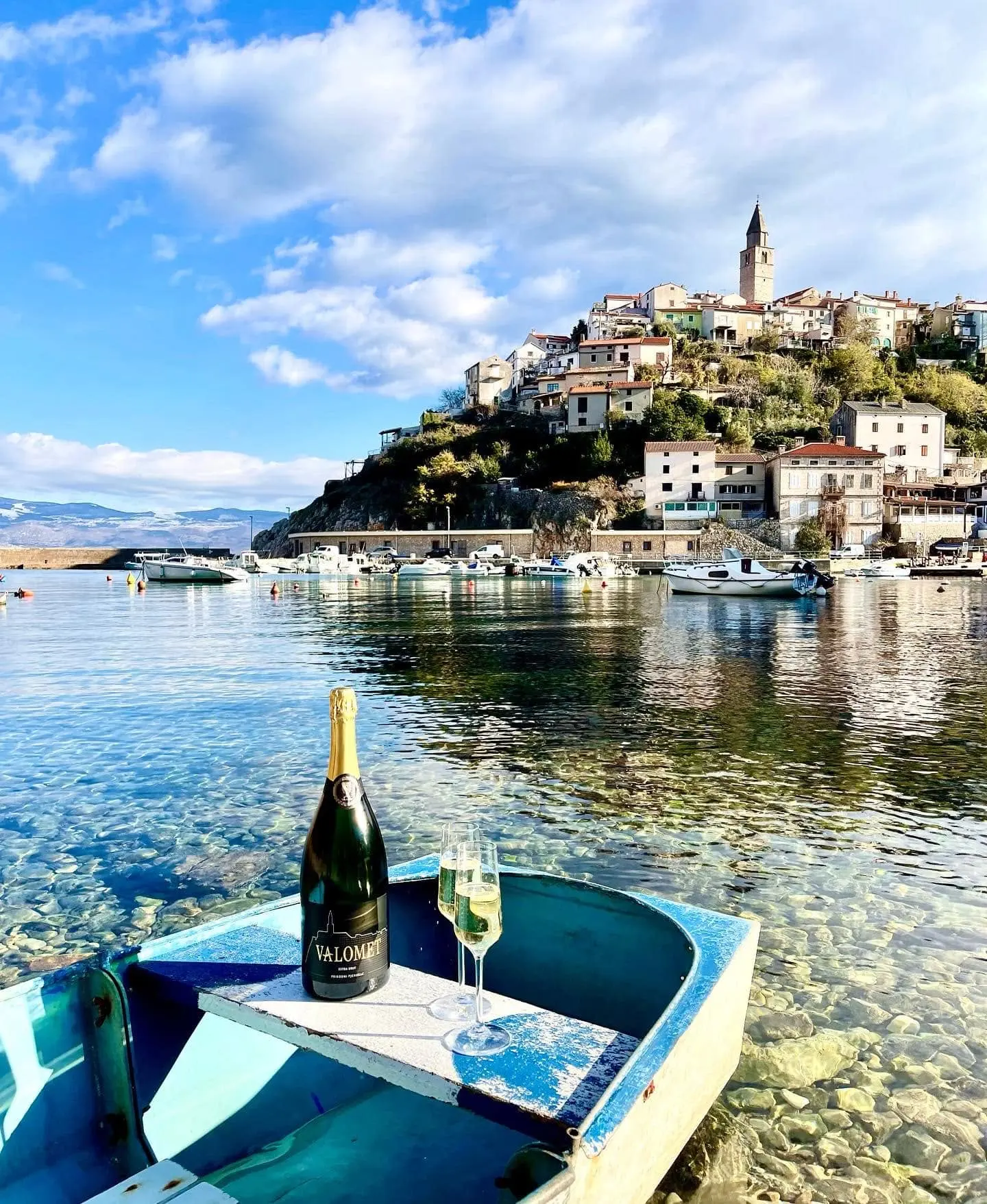
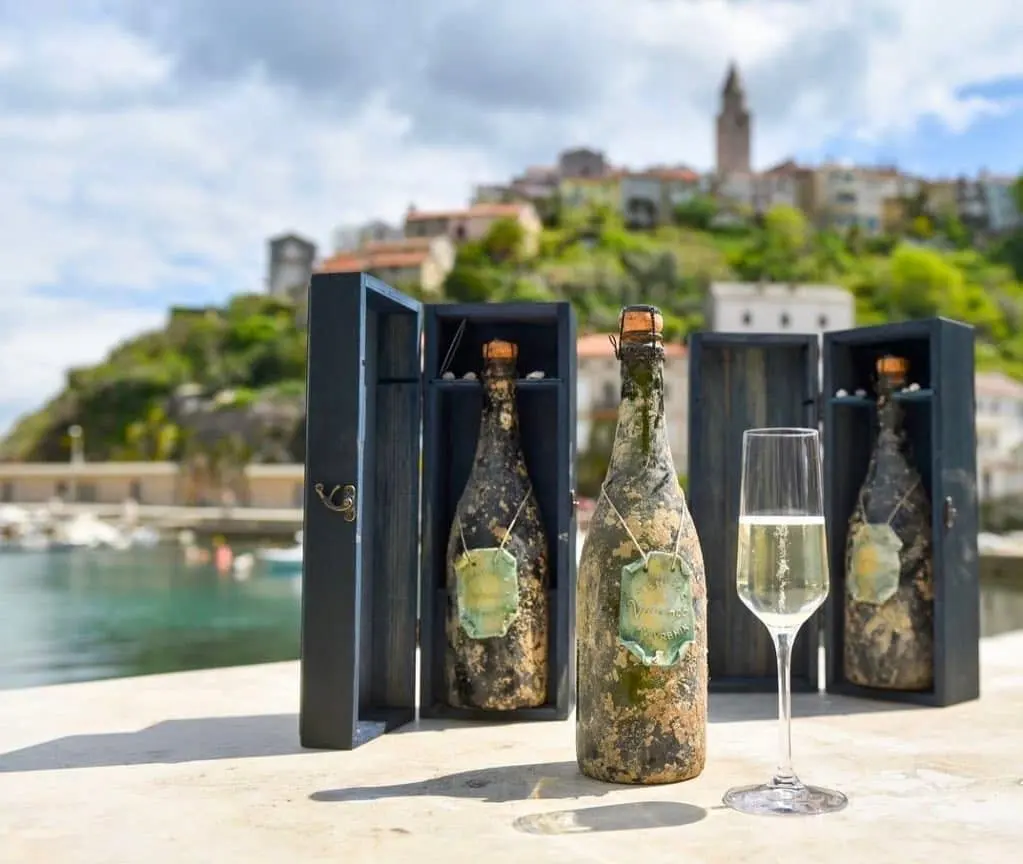
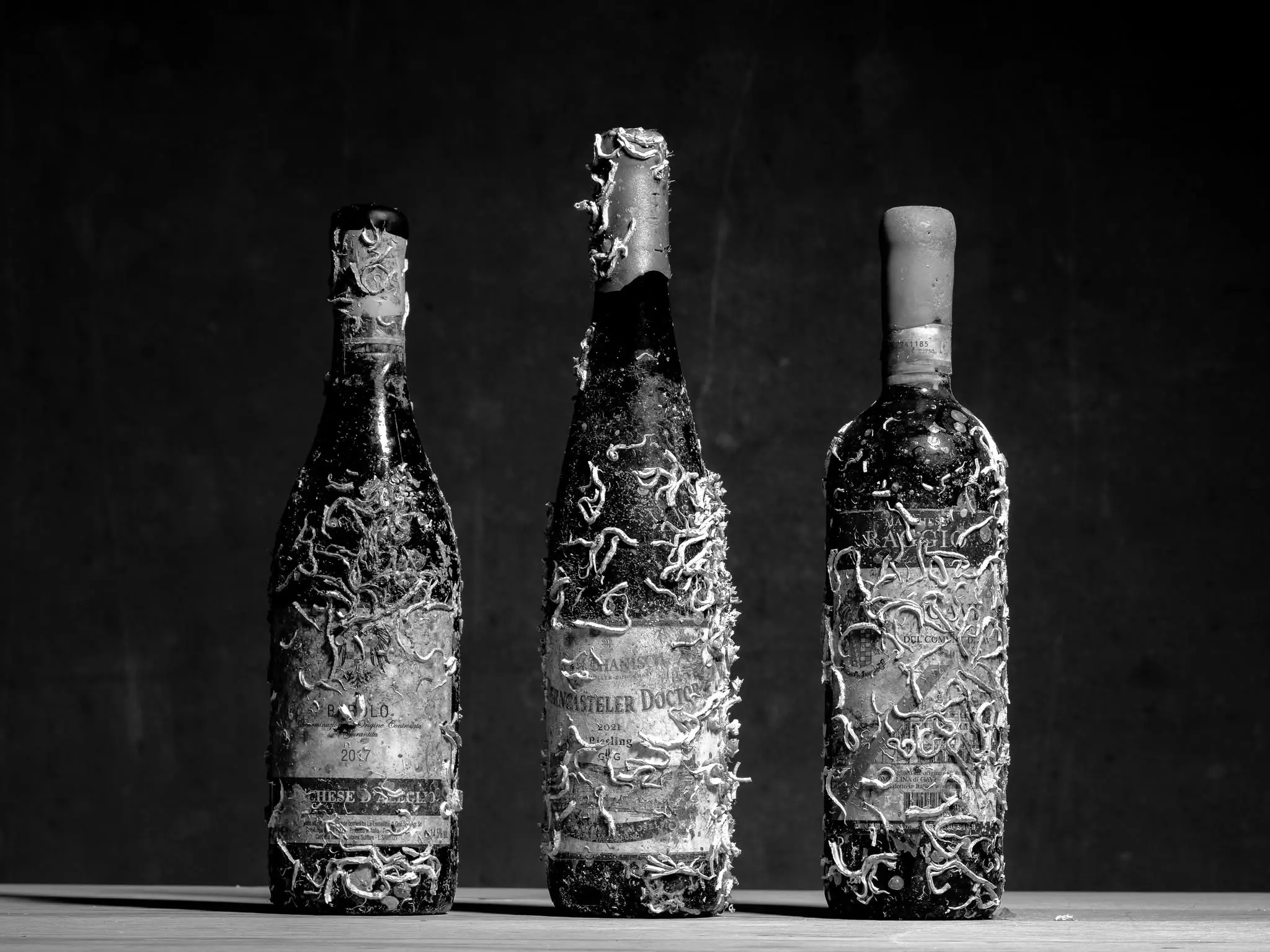
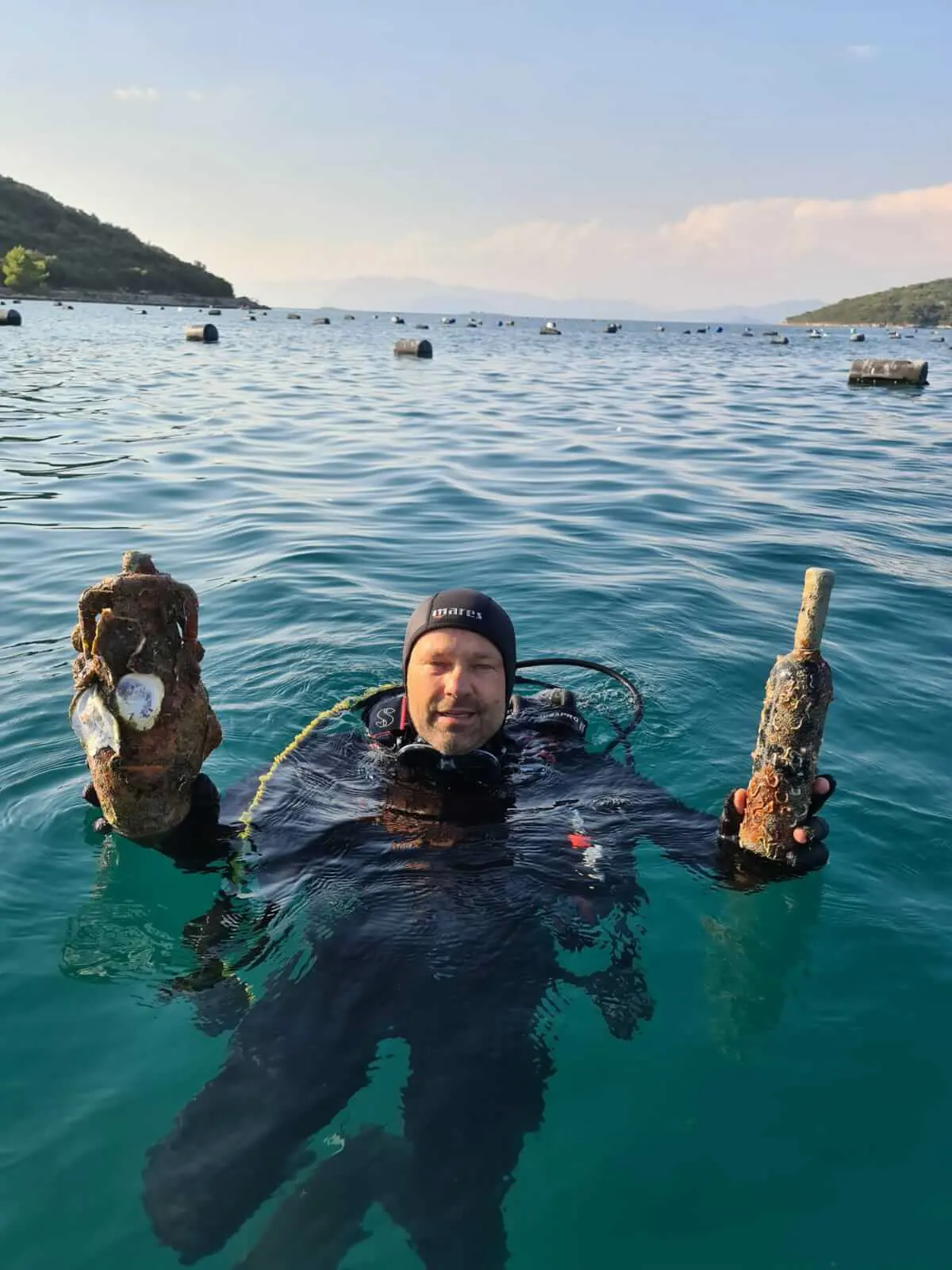
Everything starts beneath the dramatic, fifty-meter-high cliffs of Vrbnik. It was here at the PZ Vrbnik cooperative nearly twenty years ago that winemakers took a pioneering leap and lowered their sparkling wine, Valomet (100% indigenous Žlahtina), to the bottom of the sea. When divers finally bring it back to the surface, each bottle of Valomet is encrusted in a thick, natural armor of limestone, shells, and calcified algae. No two are alike. They look like artifacts from a lost ship, yet in the glass, they are pure elegance.
Zadar Archipelago and Kvarner: A Laboratory of Taste
For those who love comparisons and want to experience what the sea truly does to wine, the team behind the Coral Wine Project is creating fascinating things. They submerge indigenous varieties such as Malvazija, Pošip, and Babić to depths of 15 to 30 meters, while always keeping part of the same batch in a traditional cellar on land. Tasting a sea-aged Pošip, Malvazija, or Babić from the Coral Wine Project alongside its land-aged counterpart is the finest wine lecture you can experience on the Adriatic.
Drače, Pelješac: Amphorae from a Sunken Ship
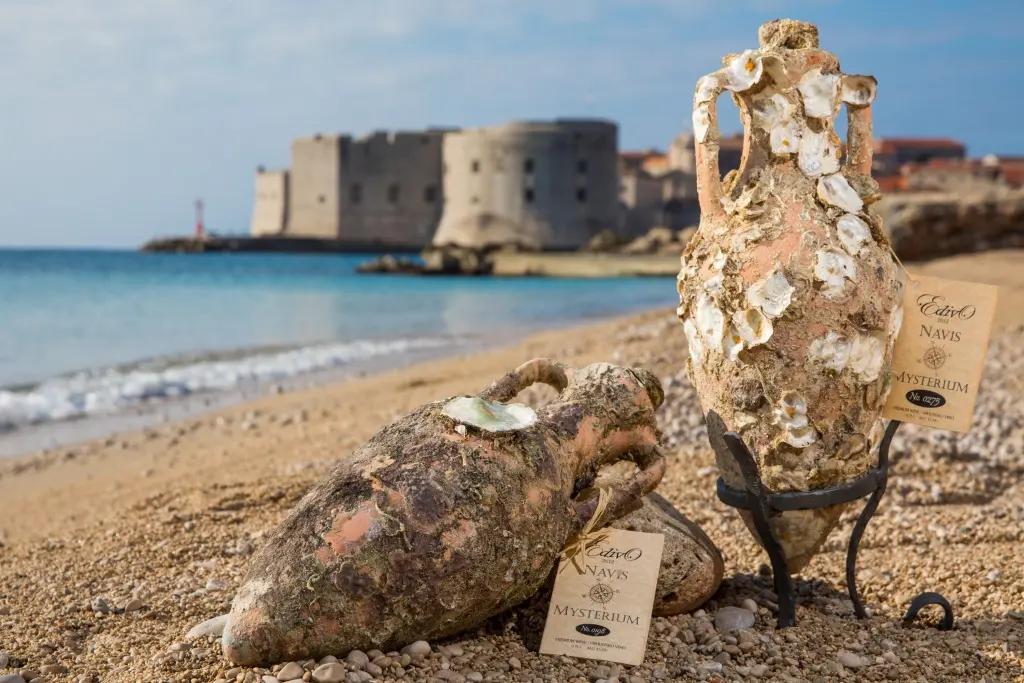
Further south, in the calm waters of Mali Ston Bay, the Edivo winery took romance a step further. Their Plavac Mali, Navis Mysterium, is first bottled and then sealed inside clay amphorae with a double layer of wax before being lowered to a depth of around twenty meters—directly onto an old sunken fishing boat. After a year or two underwater, the clay becomes overgrown with corals, while the Navis Mysterium inside turns velvety, warm, and deep.
How to Find Them (and How to Drink Them)
These releases—whether Valomet, Navis Mysterium, bottles bearing the Coral Wine Project signature, or rare amber Malvazijas—are always small, just a few hundred or a thousand bottles a year, so you won’t find them on supermarket shelves. The finest specimens end up in private collections, on the wine lists of coastal Michelin-starred restaurants, or directly in the tasting rooms of the wineries themselves (always reach out in advance; everything here is arranged personally).
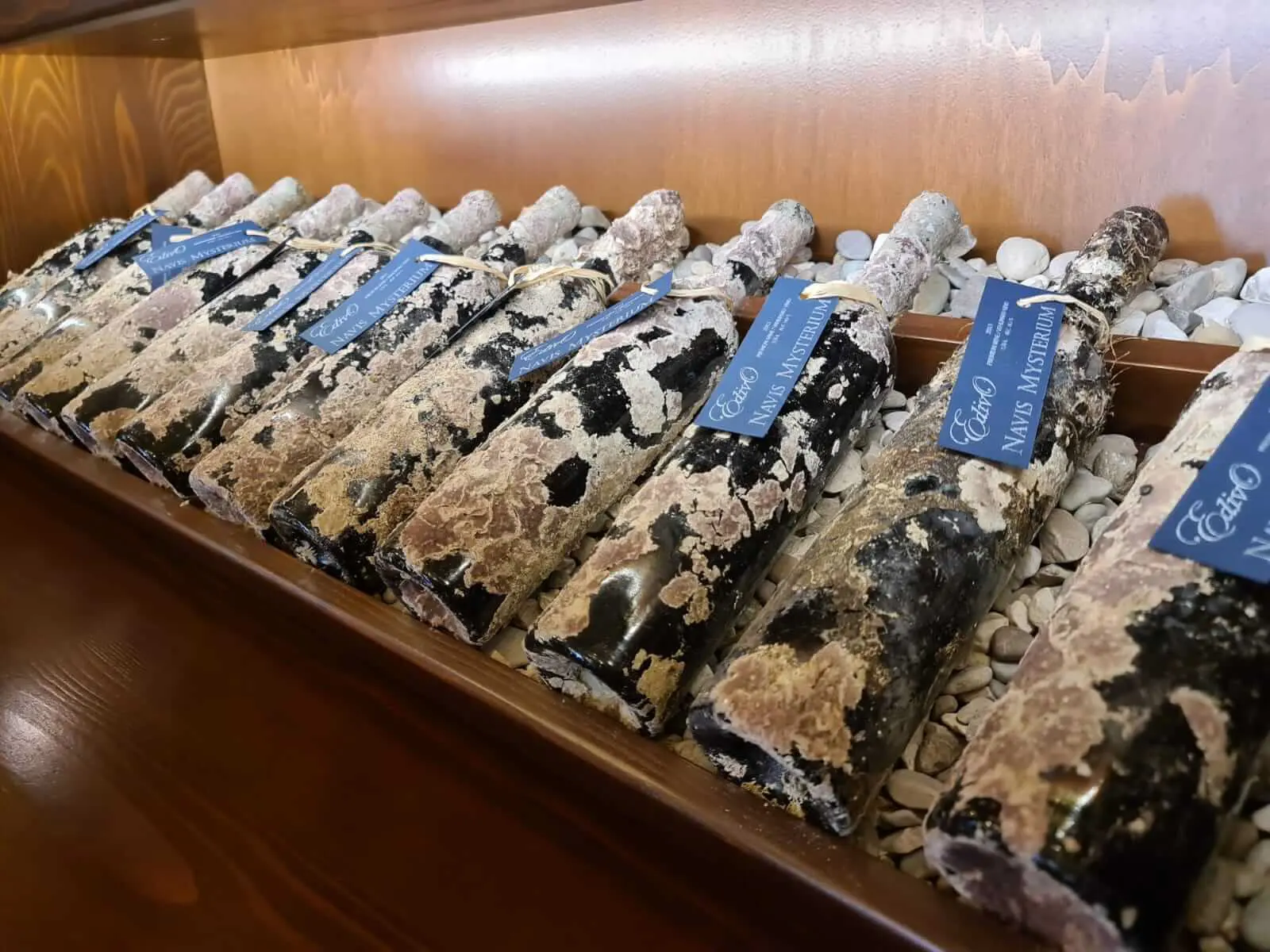
When you finally get your hands on one of these bottles, don't rush. Notice the layer of tiny salt crystals left on the cork as you pull it out. Pour the wine into a wide glass and let it breathe. This isn't just wine—it is fjaka in liquid form, captured in dark-green glass at the bottom of the Adriatic.
Images: Edivo vino, Kabola winery, Coral wine, PZ Vrbnik